The Match Ends and Everyone Disappears: Overwatch's Loneliness Problem
Overwatch can assemble a team in seconds, but its matchmaking loop rarely creates lasting connection. For players already struggling, anonymous teammates, toxicity, and repeated losses can make a social game feel brutally isolating.
At a glance
- Core problem
- Temporary teams with little continuity
- Research signal
- Toxicity is associated with psychological distress
- Causation
- Not established
- Protective factor
- Stable social connection
No Overwatch-specific clinical study establishes that its matchmaking system causes depression. This article distinguishes reported player experience, observational associations, and causal evidence.
Overwatch is social by design and lonely by default
Overwatch asks strangers to trust each other immediately. A tank commits, supports follow, damage players take an angle, and an entire fight can collapse because one person moved half a second too early. The game is built around cooperation so tight that five independent players have to behave like a practiced unit.
Then the results screen arrives and the unit disappears. The people who just spent ten minutes depending on one another are scattered back into separate queues. A good teammate becomes a fading endorsement card. A bad teammate becomes an avoid slot. Most of the time, neither becomes a person you will know.
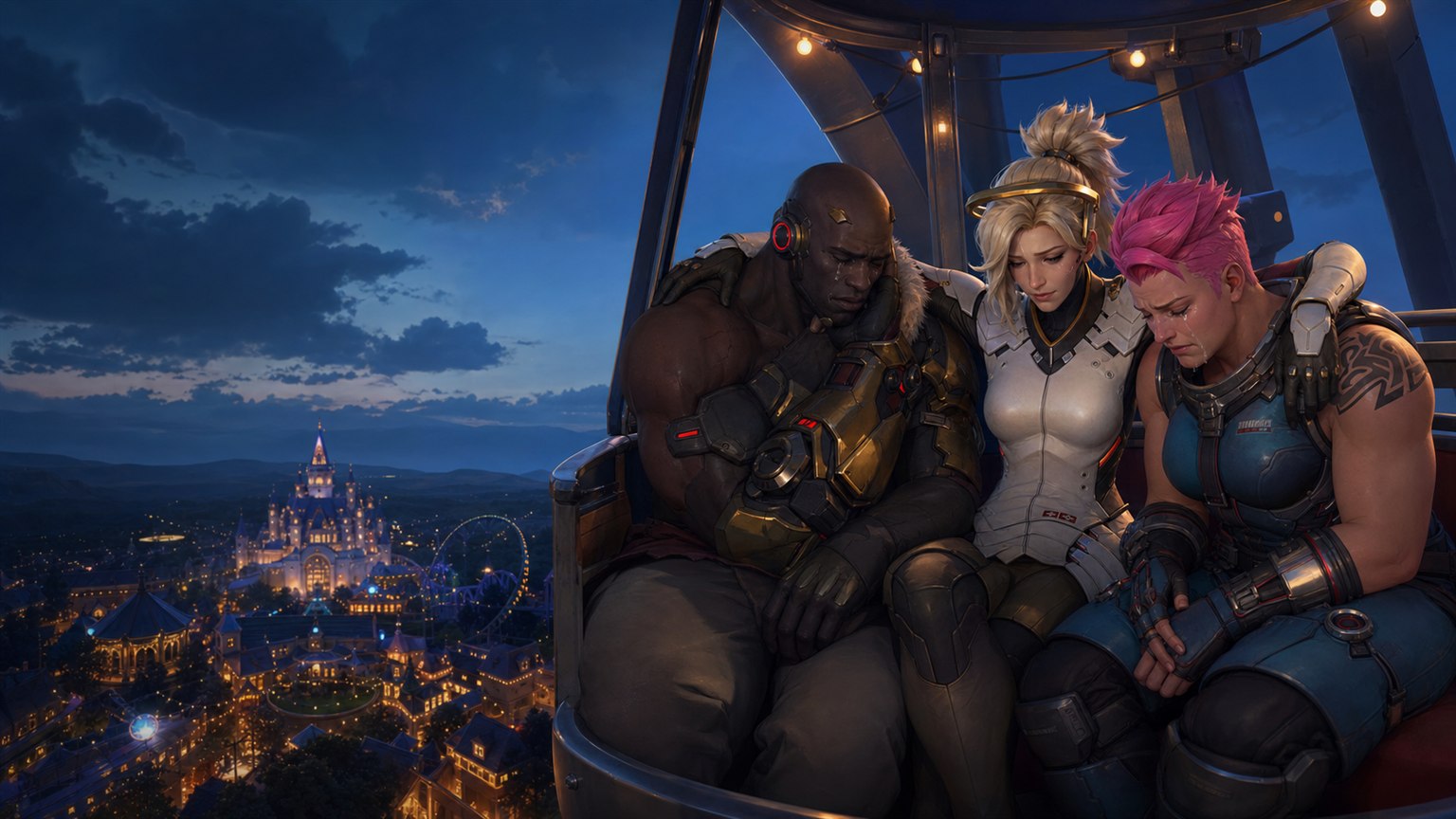
That contradiction sits at the center of solo queue. Overwatch is one of the most social competitive games ever made, yet its default loop produces almost no durable social structure. For someone already lonely, burned out, or depressed, repeatedly entering teams that vanish can make the game feel less like connection and more like proof that every interaction is temporary.
The matchmaker solves the wrong human problem
A matchmaker has a narrow engineering job. It searches for compatible skill ratings, fills roles, accounts for groups, watches queue time, and tries to produce two teams with a reasonable chance to win. Blizzard has written extensively about that balance: tighter skill ranges can improve match quality, but they can also increase waiting, restrict grouping, and create pressure around unpopular roles.
Recent format discussions acknowledge the emotional side of those tradeoffs. Blizzard has said fast team fights can make stomps feel more common and early momentum can make a match feel unfair. It has also identified social pressure as a risk when flexible team formats leave several players negotiating who should switch roles.
Those are real design problems, but they still treat players mainly as inputs to a fair contest. The system does not ask whether two people communicated well in the previous match, whether a player has spent the night in silent lobbies, or whether a reliable group would matter more than another theoretically balanced set of strangers. It optimizes the next match, not the relationship between matches.
When every teammate is disposable
An endless sequence of anonymous teams changes how people treat one another. There is little reputational cost to snapping at a support player you may never see again. There is little incentive to patiently teach a new tank. Even positive communication can feel inefficient when everyone knows the lobby is about to dissolve.
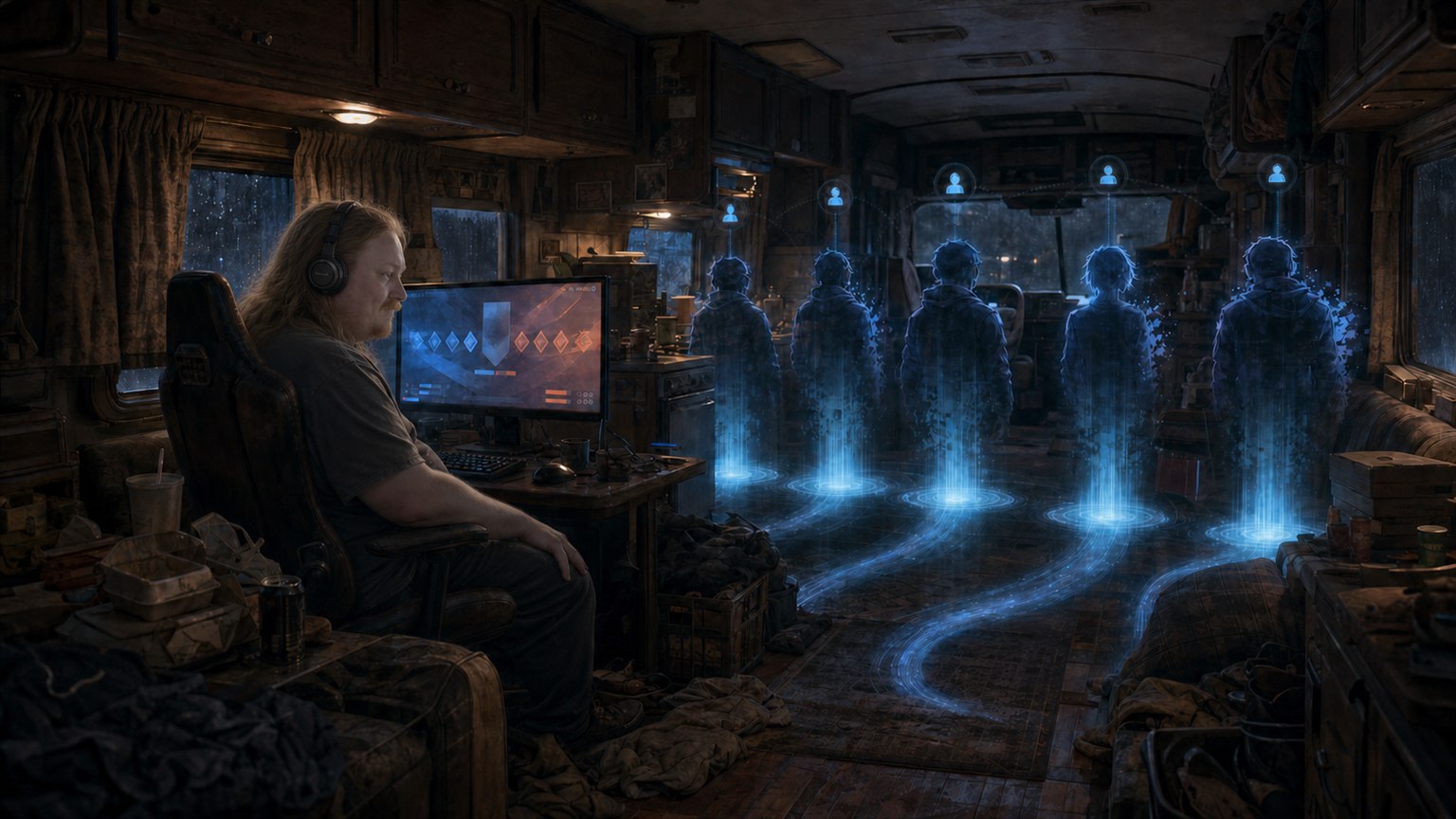
The result is a strange form of crowded isolation: a player can spend hours surrounded by voices, callouts, pings, and hero chatter without forming a single lasting connection. The game delivers social contact, but not necessarily social support.
That distinction matters. A headset full of strangers is not the same thing as having teammates who recognize when you are having a rough night. Matchmaking can create cooperation without belonging, and the gap between those two experiences is where loneliness can grow.
Toxicity raises the emotional cost
The strongest evidence is not that matchmaking directly causes depression. It is that hostile multiplayer environments are associated with worse psychological outcomes, particularly for people repeatedly targeted by other players.
A 2022 study of 2,097 Hungarian gamers found that 66 percent reported being victims of toxic behavior during the previous year. Younger players and people who spent more time in competitive shooters and multiplayer battle arenas were more likely to report victimization. Repeatedly victimized players also reported more depressive symptoms and more problematic gaming.
That study was observational and cannot prove that toxicity caused those symptoms. People who are already distressed may play differently, remember negative interactions more intensely, or spend more time in environments where abuse occurs. The responsible conclusion is association, not diagnosis.
Still, the mechanism is easy to recognize. If every loss carries blame, insults, sabotage, or the expectation that someone will explode in voice chat, queueing stops being a neutral leisure activity. It becomes another place where a vulnerable player expects rejection.
Depression is not a synonym for a loss streak
Players often use the word depression to describe a miserable session. Clinical depression is different. The World Health Organization describes it as persistent depressed mood or loss of interest and pleasure, usually accompanied by other symptoms and lasting most of the day, nearly every day, for at least two weeks.
No published clinical study establishes that Overwatch's matchmaker causes depressive disorder. A rank drop, a streak of one-sided games, or an abusive teammate can worsen somebody's night without being the source of a medical condition. At the same time, dismissing the emotional impact because it is happening inside a game is equally careless.
For a player already dealing with depression, the important question is not whether Overwatch created the illness. It is whether the current way of playing is helping, doing nothing, or reliably making the symptoms worse.
Gaming itself is not the villain
Broad claims that more gaming automatically means worse mental health do not hold up well. A 2022 Oxford-led study linked objective play data from 38,935 players with repeated well-being surveys and found little evidence that time spent playing games had a meaningful causal effect on well-being. The researchers found that motivation and the quality of the experience mattered more than the raw number of hours.
A nationwide Korean study published in 2025 also found that the relationship between gaming and loneliness was not linear. Low-risk players reported lower loneliness than both non-risk and high-risk groups after adjustment for several confounders. In other words, gaming can be socially useful without unlimited play being harmless.
This is the balance an honest Overwatch discussion needs. The same game can be a weekly meeting place for one group and a punishing isolation loop for another. The difference is often not the executable running on the computer. It is whether play creates agency, friendship, and recovery, or replaces them.
The missing layer is continuity
There is evidence that structured gaming communities can support people rather than isolate them. A 2026 longitudinal observational study followed 438 adults in a professionally facilitated gaming community. Participation was associated with reductions in depressive and anxiety symptoms over 60 days, although the study design could not prove the program alone caused the improvement.
What that community supplied was precisely what solo matchmaking lacks: recurring people, deliberate support, moderation, and a reason to return that was not a rank number. The games created a shared activity, but the relationships did the heavier work.
Overwatch already contains the raw material for that kind of connection. Its roles encourage trust. Its heroes create shared identity. Its matches generate stories players remember for years. The weak point is that the system treats each successful team as disposable.
What Blizzard could build
A healthier social layer would not require forcing strangers into friendships. It would make continuity easier when players actively want it. The current post-match flow is optimized for leaving. It could be redesigned to make staying together just as effortless.
- A prominent opt-in rematch or temporary squad button after close, positive matches.
- Short-lived social groups that persist for several games without requiring an immediate friend request.
- Matchmaking preferences for communication level, competitive intensity, and willingness to flex roles.
- Better discovery tools for recurring groups, including schedule, rank range, role needs, and moderation controls.
- Stronger post-match recognition for calm communication, adaptation, and teamwork rather than performance alone.
- More visible breaks after long loss streaks, framed as recovery tools rather than punishment.
- Faster, clearer feedback when abusive communication reports lead to action.
What players can do before the system changes
The most effective response is to stop asking anonymous matchmaking to provide something it was not designed to provide. One dependable duo can transform the experience. A small recurring group, even if it only meets twice a week, creates continuity that a hundred solo games cannot.
It also helps to treat mood as seriously as rank. If every queue begins with dread, if wins bring only relief, or if losses spill into sleep, work, and relationships, logging off is not weakness. Muting abusive channels early, setting a fixed stop time, and refusing to chase losses can keep a bad session from consuming the rest of the night.
Persistent low mood, loss of interest, hopelessness, sleep disruption, or difficulty functioning deserves attention outside the game. A licensed mental-health professional can assess symptoms that a ranking screen cannot.
- Add players who communicate well instead of waiting for somebody else to send the request.
- Use a regular community or small private server rather than relying exclusively on solo queue.
- Stop after a preselected number of games or when the session becomes emotionally flat.
- Disable text or voice channels that repeatedly expose you to abuse.
- Separate personal worth from rank movement, win rate, and visible progression.
A team should have a chance to become a team
Overwatch does not need to be blamed for every depressed player to take loneliness seriously. The game promises teamwork, then repeatedly erases the team. That structure is efficient for matchmaking and weak for belonging.
A healthier version of the system would still create fair matches, but it would also recognize when strangers have become something worth preserving. The matchmaker can find players. The next challenge is helping some of them stop being strangers.
Questions and answers
Does Overwatch matchmaking cause depression?
No clinical evidence establishes that Overwatch matchmaking causes depressive disorder. Toxicity, isolation, and perceived unfairness can worsen a player's experience, especially when that person is already struggling, but association is not proof of causation.
Why can solo queue feel lonely in a team game?
Matchmaking creates short-term cooperation but usually dissolves the group immediately afterward. Players can have constant social contact without developing stable relationships or dependable support.
Is playing video games inherently bad for mental health?
No. Large studies have found that play time alone has little or inconsistent influence on well-being. Motivation, social context, toxicity, loss of control, and whether gaming supports or replaces other parts of life appear more important.
What signs suggest it is time to step away or seek support?
Persistent low mood, loss of interest, hopelessness, sleep disruption, or difficulty functioning for roughly two weeks or longer should be taken seriously. A qualified mental-health professional can provide an individual assessment.
What could make Overwatch less isolating?
Easier temporary squads, better recurring-group discovery, communication preferences, stronger moderation, and a post-match flow that helps positive teams stay together could create more continuity.