Why Blizzard Rebuilt Antarctic Peninsula
Low map-vote results and repeated readability complaints led to wider fights, clearer routes, warmer color, and a new environmental hazard.
At a glance
- Mode
- Control
- Reworked points
- Three
- New hazard
- Freezing
Feedback and map voting pointed to the same problem
Players repeatedly described Antarctic Peninsula as dark, cramped, and difficult to read. Blizzard's own map-vote data supported the criticism: it was the least-picked map by a large margin.
The rework therefore targeted both play and place. Routes were simplified and opened for larger fights, while the art team added warmer orange and yellow accents so each point no longer blended into the same field of blue ice.
Each point received a stronger identity
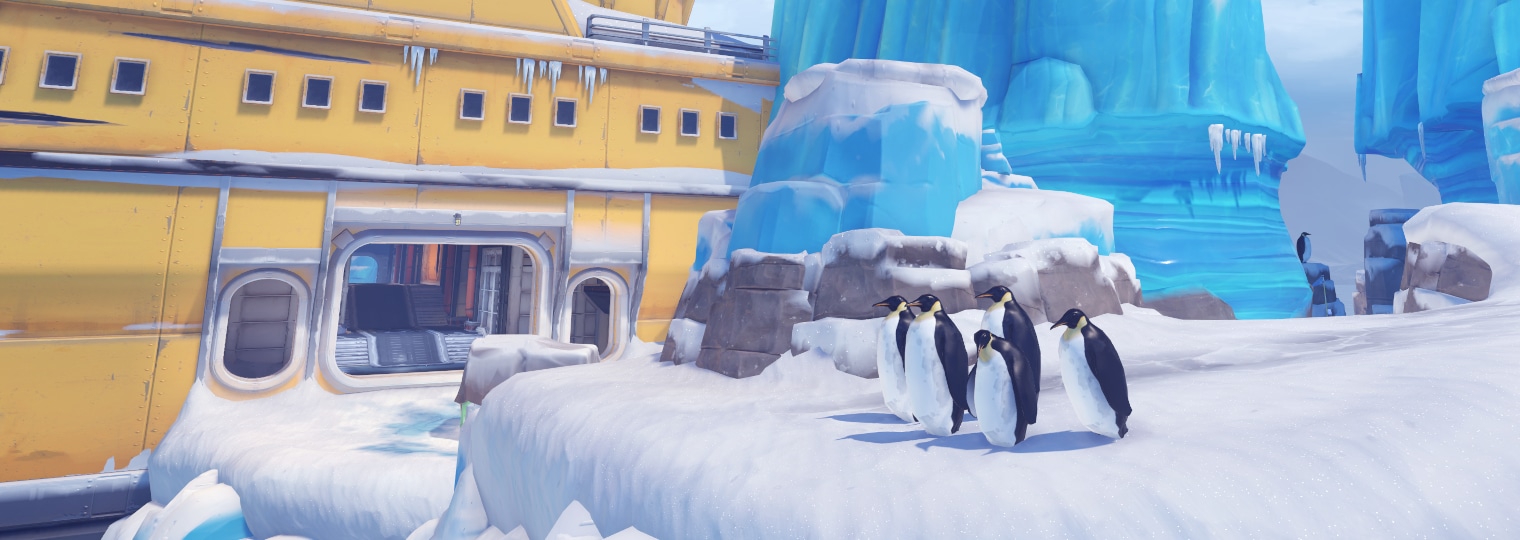
Drilling Rig gained an enormous drill and a larger capture area. Icebreaker made the ship setting clearer through color-coded routes, widened chokes, and moving penguin groups that reinforced the point's location above the water.
Anomaly replaced Sub-Levels and received the most substantial layout work. Blizzard removed a confusing upper room, clarified paths to the objective, and retained vertical play through drill holes around the redesigned space.
Anomaly introduced a freezing ceiling
A malfunctioning weather-control device became Anomaly's centerpiece and created the map's first freezing environmental hazard. Heroes flying too high could take frostbite, adding a readable boundary without simply closing the space.
The finished map reflects the reason broad reworks take time: level design, lighting, animation, sound, VFX, tech art, and environment art all had to solve the same navigation and identity problems together.